
RedAlert vs ImageTrend: Fire First, and Built for NERIS as It Was Designed
A side-by-side look at two records platforms: one built for fire departments since 1994, and one built around EMS, hospitals, and state reporting, with a fire suite alongside.
- Fire first, not EMS first. Alpine has built fire department software since 1994. ImageTrend lists EMS first among the industries it serves, alongside hospitals, government, and research.
- NERIS the way it was designed. RedAlert submits your incident data to NERIS the way the national system is built. ImageTrend has publicly recommended routing NERIS data through the state first instead.
- Built around your department. Add custom fields, custom forms, and custom workflows to any record in the system, and every field flows straight into your reporting. When you need something more involved, like a custom report, Alpine's team in Rochester builds it with you. That includes the state-specific fields your department tracks, and any other data points you want on every call report.
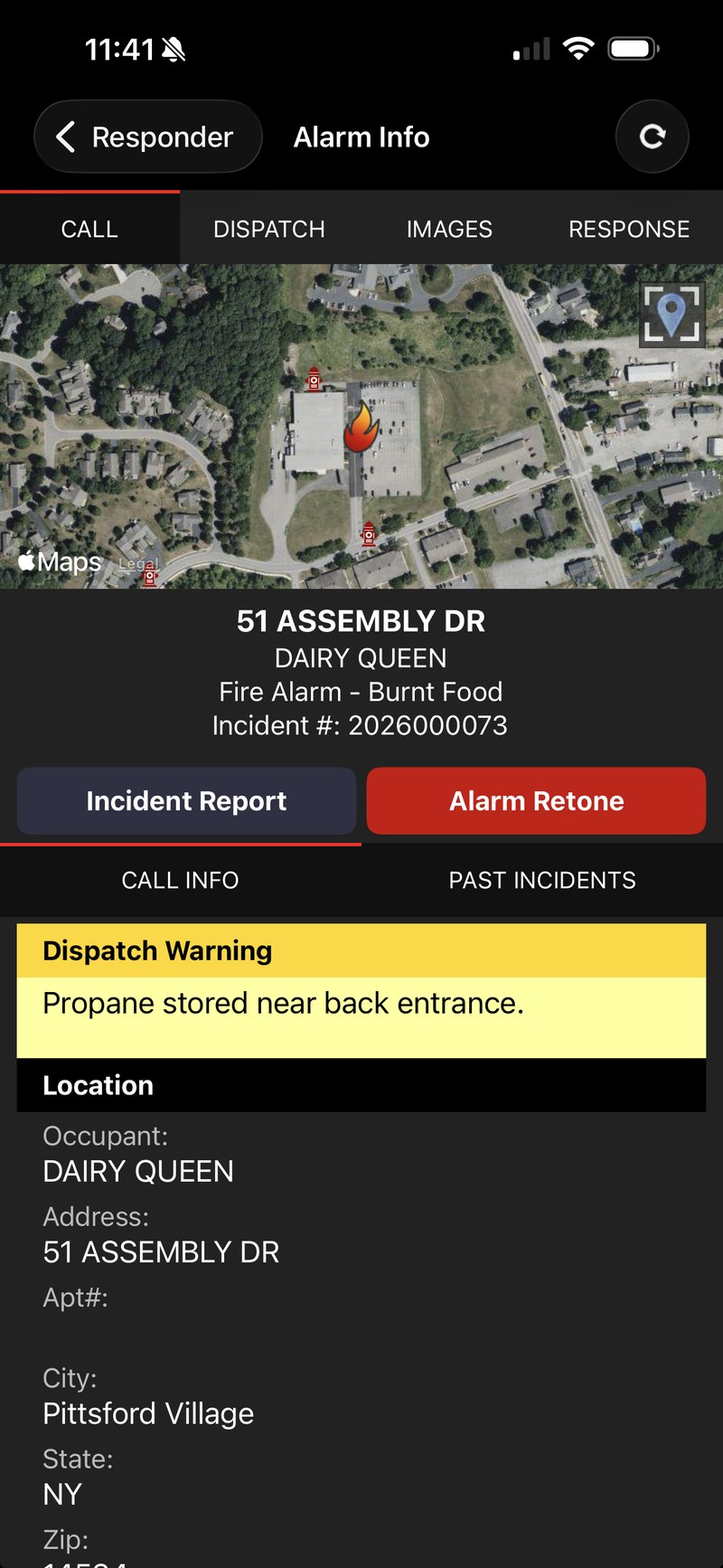
- Alerting, mapping, and the rig, all in RedAlert. With the Responder App, members get alerted, respond, and report on the call without leaving RedAlert, and crews plot hydrants, edit preplans, and draw incident perimeters from their own phones. No member alerting app, MDT, or station display appears in ImageTrend's public platform listing.
- Attendance you can actually defend. The RedAlert Kiosk is station-mounted biometric check-in with call-triggered time windows, built for LOSAP, stipend, and pay-per-call programs.
- White-glove onboarding. A dedicated, Rochester-based project lead manages your rollout, migrates your data with nothing lost, configures the system, and runs weekly meetings with your team until you are live.
- Support from Rochester, New York. Real people you can call and email, onshore, in the same building as the engineers who build the software.
Choose RedAlert if...
- You are a fire department first, and want software built that way from the ground up
- You want your NERIS reporting to follow the data flow the national system was designed around
- You want custom fields, forms, and workflows built around how your department actually operates
- You want alerting, en-route mapping, the apparatus tablet, and records from one platform
- You need verifiable attendance for a LOSAP, pay-per-call, stipend, or points program
- You want a dedicated project lead who migrates your data, configures your system, and meets with your team weekly until you are live
- You want to call a U.S.-based support team and reach someone who knows your system
Consider ImageTrend if...
- You need NEMSIS-compliant ePCR alongside your fire records
- Your state runs its EMS or fire reporting on ImageTrend and you want your department on the same platform
- You are a federal or military fire department that requires a FedRAMP-listed vendor
NERIS Compliant
Listed on FSRI's own integration partners page.
Since 1994
Over 1,000 departments and 200,000 first responders.
Onshore Support
Rochester, NY. Same building as engineering.
Configured to You
Custom fields, forms, and reports on any record.
Side by Side Comparison
Built Around Your Department
| Category | RedAlert | ImageTrend | What This Means |
|---|---|---|---|
| Custom Fields & Workflows | Table-driven SQL architecture. Departments add dropdowns, checkboxes, and free text fields to any record in the system (incidents, personnel, apparatus, properties, training, and attendance) and set up workflows around how they operate, with Alpine's team building anything more involved. | Markets its fire platform as one configurable operating system, and featured customer quotes on its fire page describe customizing the program to their needs. | If your department tracks it, it can be a field, on any record in the system. Your team adjusts fields and forms as your needs change, and Alpine's team in Rochester builds the bigger pieces with you. |
| Custom Forms | The forms your members fill out are built to your department: truck checks, training records, fire reports, special studies, plus-one codes, property inspection checklists, personnel records, and more, with your own fields. | Markets configurable inspections, permits, pre-plans, and incident reporting within one platform. | Your members fill out forms your department designed, not a generic template, and every field they complete is available for reporting. |
| Reporting & Analytics | Hundreds of built-in reports across every module, plus custom reports built by Alpine's engineering team. Every custom field and form feeds reporting, which is how custom payroll, ISO, OSHA, and point-program reports get built. | Publicly markets Unified Analytics, AI Assist, and a pre-plan report writer with hundreds of built-in reports. | When the report you need does not exist, Alpine's engineering team builds it. Thirty years of department requests are why most of what you need is already there. |
Operations
| Category | RedAlert | ImageTrend | What This Means |
|---|---|---|---|
| Incident Reporting & NERIS | NERIS Compliant, submitting incident data to NERIS the way the national system is designed. Incident templates, one-click narrative generation, custom plus-one codes, and a validator that catches errors before submission. Reports can be started from the apparatus tablet, a phone, or a desk. | Publicly markets NERIS compliance. In a September 2025 policy statement, ImageTrend recommended an agency to state to NERIS data flow, which differs from the direct flow described in NERIS documentation. | Your NERIS submissions follow the path the national system was built around. State-required fields are built into your incident report as custom fields, along with any other data points your department wants captured on every call, without rerouting the national submission. |
| Pre-Incident Planning & Mapping | Preplans, properties, hazmat, dispatch warnings, site plans, and contacts can be created and edited in the Responder App on a phone or tablet, as well as in Desktop. Crews plot properties, hydrants, and points of interest onto the map from the field, with day, night, and satellite views and custom layers per user. Parent and child property relationships for malls, campuses, and complex sites. | Publicly markets Visual Pre Plans, including mobile tools for mapping hazmat storage, entry points, and structural features from a tablet or phone, plus CAD integration and risk scoring. Acquired FlowMSP, a pre-incident planning platform, in August 2024. | Preplanning was built into RedAlert rather than bought. The crew walking the building updates the preplan in the Responder App while standing in it, and the same record reaches every responder. |
| Field Mapping & Incident Shapes | Members draw polygons, lines, and circles on the map in the Responder App: a fire perimeter, a road closure, a staging radius. Shapes can be tied to a NERIS incident, styled by color and opacity, and set to expire at a date and time. Responding units and responding personnel appear on the same map. | Publicly markets mobile mapping for pre-plans and dynamic mapping tools for analytics. Drawing incident shapes during an active call does not appear in its public materials. | Draw the perimeter, mark the road closure, or set the staging area from the scene, and every member looking at the map sees it. Shapes expire on their own, so last week's closure is not cluttering this week's map. |
| Hydrants & Water Supply | Crews view, plot, inspect, and flow test hydrants in the Responder App on a phone or tablet. Enter the full three-outlet flow test and a one-tap calculation returns available flow at 0, 10, and 20 psi, then writes the results back to the hydrant record, including its NFPA class. Out-of-service hydrants show darkened on the responder's map, and primary, secondary, and tertiary hydrants attach to each preplan. Import from CSV, GIS, and shapefiles. | Publicly references a Hydrants Module in ImageTrend Elite, and describes its pre-plan software as capturing water supply points. | The flow test happens at the hydrant, on a phone, and the math is done for you. An out-of-service hydrant goes dark on the responder's map automatically, and every preplan that depended on it is flagged. |
| Fire Prevention & Inspections | iPad inspections with your own occupancy types, permit types, and violation code sets. Permits generated from inspections with automatic renewal letters. Investigations case management with court-ready reports. | Publicly markets Permits and Inspections for fire codes, permits, and violations, plus Investigations. | Inspection findings reach responding crews through RedAlert's own Responder App and MDT, so a hazard written up on Tuesday is on screen at the next call to that address. |
| Training & Certifications | Course records, certification expiration tracking with advance warning, event scheduling, and verified attendance capture at the Kiosk. | Publicly markets a fire and EMS learning management system and license management. | Drill attendance comes from verified check-in instead of a sign-in sheet, and training hours feed your point or stipend program automatically. |
| Assets, Inventory & Maintenance | Four record types with their own fields: general inventory, SCBA testing, hose testing, and apparatus. Location tracking down to the compartment and shelf. QR and barcode scanning from any phone or tablet. Work orders with parts, labor, and vendor cost. | Publicly markets inventory management with mobile check-in and check-out, barcode scanning, and alerts for low stock, expiring supplies, and maintenance needs, positioned around EMS supplies and equipment including controlled substances. | RedAlert's asset records are built around the fire apparatus: SCBA testing, hose testing, truck checks down to the compartment and shelf, and work orders that track the part, the labor, and the vendor cost through to completion. |
| Attendance, LOSAP & Award Programs | The RedAlert Kiosk: station-mounted biometric check-in by fingerprint, key fob, or ID card, with photo verification and CAD-triggered time windows that lock automatically. Point, stipend, and pay-per-call programs configured to your plan document. Attendance can also be recorded in Desktop or Mobile without the Kiosk. | LOSAP and point-program tracking do not appear in ImageTrend's public platform listing. No station-mounted attendance hardware appears in its public materials. | If your department distributes LOSAP points, stipends, or per-call pay, attendance is an accounting record. RedAlert makes it verified rather than self-reported: the member's own fingerprint or credential, at the station, inside a window the call defined, with a photo. |
Personnel and Scheduling
| Category | RedAlert | ImageTrend | What This Means |
|---|---|---|---|
| Personnel & Roster | One member record driving alerting, station check-in, app access, training, certifications, and response history. Permissions configured to your command structure down to the field level. | Publicly markets license management and scheduling. | Add a member once and that record drives their alerting, check-ins, app access, and training file. |
| Scheduling | Any repeating rotation, time codes and accrual banks built to your definitions, custom payroll reports formatted for your payroll system, and duty crew shifts measured against actual Kiosk clock-in. | Publicly markets automated shift and workforce management. | Payroll reports come out in the format your payroll system imports, built around your own time codes, and volunteer duty shifts are measured against when members actually walked in. |
| Mobile Access | Native applications: RedAlert Mobile for field work, RedAlert Responder for alerting, and RedAlert MDT for the apparatus tablet. The full Desktop map runs in the Responder App, so members plot and edit properties, hydrants, points of interest, and incident shapes from their own phones. iOS and Android. | Publicly markets mobile-first pre-plan and inspection tools for tablets and phones, and mobile inventory check-in with barcode scanning. | Field work, alerting, mapping, and the apparatus tablet are all RedAlert's own apps, on one roster and one login, supported by one vendor. |
Technology and Integrations
| Category | RedAlert | ImageTrend | What This Means |
|---|---|---|---|
| CAD Interface | One interface that pre-fills the incident report with times, units, address, call type, and dispatcher comments, and simultaneously feeds the alerting app, the apparatus tablet, the station display, and the Kiosk attendance window. Available as a module. | Publicly markets CAD integration for pre-plans, and describes FlowMSP as distributing pre-incident information via dispatch. | One dispatch feed fills in the report, drives the Responder App, the MDT, and the Station Board, and opens the Kiosk for attendance on that exact call. |
| Alerting & Response | RedAlert Responder: dispatch alerts to every member's phone, one-tap response status, GPS routing, and your own mapping. Responding units and personnel appear on the map with each member's photo and status. Includes Retone, letting a member on scene upgrade a call to a working fire or stand the department down. | A member alerting app does not appear in ImageTrend's public platform listing. | With the Responder App, the whole call stays in RedAlert: get alerted, respond, and report on the call. Retone lets the first member on scene upgrade an automatic alarm or stand the department down, and push it to everyone still en route. |
| En-Route Data (MDT) | RedAlert MDT: the live CAD feed, your hydrants and FDCs, and full preplans with hazards and utility shut-offs on every apparatus tablet. Crews can start the NERIS report from the same screen while still on scene. | An MDT product does not appear in ImageTrend's public platform listing. Visual Pre Plans is marketed as putting building layouts, hazard data, and occupancy information in crews' hands before arrival. | The crew understands the building before stepping off the truck, on a mounted screen everyone can see, and the NERIS report starts on the same tablet when the call winds down. |
| Station Displays | RedAlert Station Board turns any TV into a live command board during a call, and shows duty crew, out-of-service rigs, tasks due, and top responders between calls. | No station display product appears in ImageTrend's public platform listing. | Between calls, the firehouse screen shows duty crew, out-of-service apparatus, tasks due, and top responders year to date, so it earns its place on the wall all day. |
Buyer Experience
| Category | RedAlert | ImageTrend | What This Means |
|---|---|---|---|
| Fire Focus | Alpine Software has built fire department software since 1994 and nothing else. Over 1,000 departments and 200,000 first responders. | Founded in 1998, ImageTrend describes serving more than 3,000 customers including 20,000 agencies across fire, EMS, and hospital segments, and lists EMS first among the industries it serves. | Three decades of fire department software and nothing else. The depth shows in the parts nobody demos: point program rules, ISO-ready flow tests, and what happens when a truck check fails. |
| Pricing Model | Priced per module. Departments buy the modules they will use and skip the ones they will not. Quotes provided directly. | Marketed as an end-to-end Fire and EMS platform. ImageTrend's CEO described the FlowMSP acquisition as an opportunity for customers who want to consolidate software providers. | A volunteer department running 200 calls a year buys the fire modules it uses and skips the rest, rather than a platform spanning EMS, hospitals, and state reporting. |
| Contract Terms | Annual contracts. | Contract terms are not published publicly. | RedAlert runs on annual contracts. Before signing with ImageTrend, request the initial term, renewal terms, and any annual escalator in writing. |
| Procurement Path | Direct purchase, or through a cooperative purchasing agreement if your agency requires one. Most departments buy directly. | Publicly serves government agencies on state and federal reporting, in addition to individual departments. | Buy directly, or through a cooperative purchasing agreement if your agency's process requires one. |
| Implementation & Onboarding | 90 to 120 days typical, with a dedicated, Rochester-based project lead who manages the rollout, migrates your data with nothing lost, configures the system, and runs weekly meetings with your team through go-live. | Publicly lists implementation services and client education and training. | One person in Rochester owns your rollout from kickoff to go-live, meets with your team every week, and brings your data over complete, including NFIRS history. White-glove from start to finish. |
| Best Fit Agency Size | Any size, with particular depth for volunteer and combination departments. | Publicly serves EMS agencies, fire departments, hospitals, government, and research customers. | Volunteer and combination departments are where RedAlert specializes: attendance programs, duty crews, and departments running without dedicated administrative staff. |
| Support Experience | U.S.-based support team in Rochester, New York. Phone and email, real people, in the same building as the engineers who build the software. | Publicly lists customer support, customer enablement, and client education and training. | Call Alpine and you reach Rochester, New York: real people, onshore, in the same building as the engineers who build the software. |
Built Around Your Department
Custom Fields & Workflows
RedAlert
Table-driven SQL architecture. Departments add dropdowns, checkboxes, and free text fields to any record in the system (incidents, personnel, apparatus, properties, training, and attendance) and set up workflows around how they operate, with Alpine's team building anything more involved.
ImageTrend
Markets its fire platform as one configurable operating system, and featured customer quotes on its fire page describe customizing the program to their needs.
What This Means
If your department tracks it, it can be a field, on any record in the system. Your team adjusts fields and forms as your needs change, and Alpine's team in Rochester builds the bigger pieces with you.
Custom Forms
RedAlert
The forms your members fill out are built to your department: truck checks, training records, fire reports, special studies, plus-one codes, property inspection checklists, personnel records, and more, with your own fields.
ImageTrend
Markets configurable inspections, permits, pre-plans, and incident reporting within one platform.
What This Means
Your members fill out forms your department designed, not a generic template, and every field they complete is available for reporting.
Reporting & Analytics
RedAlert
Hundreds of built-in reports across every module, plus custom reports built by Alpine's engineering team. Every custom field and form feeds reporting, which is how custom payroll, ISO, OSHA, and point-program reports get built.
ImageTrend
Publicly markets Unified Analytics, AI Assist, and a pre-plan report writer with hundreds of built-in reports.
What This Means
When the report you need does not exist, Alpine's engineering team builds it. Thirty years of department requests are why most of what you need is already there.
Operations
Incident Reporting & NERIS
RedAlert
NERIS Compliant, submitting incident data to NERIS the way the national system is designed. Incident templates, one-click narrative generation, custom plus-one codes, and a validator that catches errors before submission. Reports can be started from the apparatus tablet, a phone, or a desk.
ImageTrend
Publicly markets NERIS compliance. In a September 2025 policy statement, ImageTrend recommended an agency to state to NERIS data flow, which differs from the direct flow described in NERIS documentation.
What This Means
Your NERIS submissions follow the path the national system was built around. State-required fields are built into your incident report as custom fields, along with any other data points your department wants captured on every call, without rerouting the national submission.
Pre-Incident Planning & Mapping
RedAlert
Preplans, properties, hazmat, dispatch warnings, site plans, and contacts can be created and edited in the Responder App on a phone or tablet, as well as in Desktop. Crews plot properties, hydrants, and points of interest onto the map from the field, with day, night, and satellite views and custom layers per user. Parent and child property relationships for malls, campuses, and complex sites.
ImageTrend
Publicly markets Visual Pre Plans, including mobile tools for mapping hazmat storage, entry points, and structural features from a tablet or phone, plus CAD integration and risk scoring. Acquired FlowMSP, a pre-incident planning platform, in August 2024.
What This Means
Preplanning was built into RedAlert rather than bought. The crew walking the building updates the preplan in the Responder App while standing in it, and the same record reaches every responder.
Field Mapping & Incident Shapes
RedAlert
Members draw polygons, lines, and circles on the map in the Responder App: a fire perimeter, a road closure, a staging radius. Shapes can be tied to a NERIS incident, styled by color and opacity, and set to expire at a date and time. Responding units and responding personnel appear on the same map.
ImageTrend
Publicly markets mobile mapping for pre-plans and dynamic mapping tools for analytics. Drawing incident shapes during an active call does not appear in its public materials.
What This Means
Draw the perimeter, mark the road closure, or set the staging area from the scene, and every member looking at the map sees it. Shapes expire on their own, so last week's closure is not cluttering this week's map.
Hydrants & Water Supply
RedAlert
Crews view, plot, inspect, and flow test hydrants in the Responder App on a phone or tablet. Enter the full three-outlet flow test and a one-tap calculation returns available flow at 0, 10, and 20 psi, then writes the results back to the hydrant record, including its NFPA class. Out-of-service hydrants show darkened on the responder's map, and primary, secondary, and tertiary hydrants attach to each preplan. Import from CSV, GIS, and shapefiles.
ImageTrend
Publicly references a Hydrants Module in ImageTrend Elite, and describes its pre-plan software as capturing water supply points.
What This Means
The flow test happens at the hydrant, on a phone, and the math is done for you. An out-of-service hydrant goes dark on the responder's map automatically, and every preplan that depended on it is flagged.
Fire Prevention & Inspections
RedAlert
iPad inspections with your own occupancy types, permit types, and violation code sets. Permits generated from inspections with automatic renewal letters. Investigations case management with court-ready reports.
ImageTrend
Publicly markets Permits and Inspections for fire codes, permits, and violations, plus Investigations.
What This Means
Inspection findings reach responding crews through RedAlert's own Responder App and MDT, so a hazard written up on Tuesday is on screen at the next call to that address.
Training & Certifications
RedAlert
Course records, certification expiration tracking with advance warning, event scheduling, and verified attendance capture at the Kiosk.
ImageTrend
Publicly markets a fire and EMS learning management system and license management.
What This Means
Drill attendance comes from verified check-in instead of a sign-in sheet, and training hours feed your point or stipend program automatically.
Assets, Inventory & Maintenance
RedAlert
Four record types with their own fields: general inventory, SCBA testing, hose testing, and apparatus. Location tracking down to the compartment and shelf. QR and barcode scanning from any phone or tablet. Work orders with parts, labor, and vendor cost.
ImageTrend
Publicly markets inventory management with mobile check-in and check-out, barcode scanning, and alerts for low stock, expiring supplies, and maintenance needs, positioned around EMS supplies and equipment including controlled substances.
What This Means
RedAlert's asset records are built around the fire apparatus: SCBA testing, hose testing, truck checks down to the compartment and shelf, and work orders that track the part, the labor, and the vendor cost through to completion.
Attendance, LOSAP & Award Programs
RedAlert
The RedAlert Kiosk: station-mounted biometric check-in by fingerprint, key fob, or ID card, with photo verification and CAD-triggered time windows that lock automatically. Point, stipend, and pay-per-call programs configured to your plan document. Attendance can also be recorded in Desktop or Mobile without the Kiosk.
ImageTrend
LOSAP and point-program tracking do not appear in ImageTrend's public platform listing. No station-mounted attendance hardware appears in its public materials.
What This Means
If your department distributes LOSAP points, stipends, or per-call pay, attendance is an accounting record. RedAlert makes it verified rather than self-reported: the member's own fingerprint or credential, at the station, inside a window the call defined, with a photo.
Personnel and Scheduling
Personnel & Roster
RedAlert
One member record driving alerting, station check-in, app access, training, certifications, and response history. Permissions configured to your command structure down to the field level.
ImageTrend
Publicly markets license management and scheduling.
What This Means
Add a member once and that record drives their alerting, check-ins, app access, and training file.
Scheduling
RedAlert
Any repeating rotation, time codes and accrual banks built to your definitions, custom payroll reports formatted for your payroll system, and duty crew shifts measured against actual Kiosk clock-in.
ImageTrend
Publicly markets automated shift and workforce management.
What This Means
Payroll reports come out in the format your payroll system imports, built around your own time codes, and volunteer duty shifts are measured against when members actually walked in.
Mobile Access
RedAlert
Native applications: RedAlert Mobile for field work, RedAlert Responder for alerting, and RedAlert MDT for the apparatus tablet. The full Desktop map runs in the Responder App, so members plot and edit properties, hydrants, points of interest, and incident shapes from their own phones. iOS and Android.
ImageTrend
Publicly markets mobile-first pre-plan and inspection tools for tablets and phones, and mobile inventory check-in with barcode scanning.
What This Means
Field work, alerting, mapping, and the apparatus tablet are all RedAlert's own apps, on one roster and one login, supported by one vendor.
Technology and Integrations
CAD Interface
RedAlert
One interface that pre-fills the incident report with times, units, address, call type, and dispatcher comments, and simultaneously feeds the alerting app, the apparatus tablet, the station display, and the Kiosk attendance window. Available as a module.
ImageTrend
Publicly markets CAD integration for pre-plans, and describes FlowMSP as distributing pre-incident information via dispatch.
What This Means
One dispatch feed fills in the report, drives the Responder App, the MDT, and the Station Board, and opens the Kiosk for attendance on that exact call.
Alerting & Response
RedAlert
RedAlert Responder: dispatch alerts to every member's phone, one-tap response status, GPS routing, and your own mapping. Responding units and personnel appear on the map with each member's photo and status. Includes Retone, letting a member on scene upgrade a call to a working fire or stand the department down.
ImageTrend
A member alerting app does not appear in ImageTrend's public platform listing.
What This Means
With the Responder App, the whole call stays in RedAlert: get alerted, respond, and report on the call. Retone lets the first member on scene upgrade an automatic alarm or stand the department down, and push it to everyone still en route.
En-Route Data (MDT)
RedAlert
RedAlert MDT: the live CAD feed, your hydrants and FDCs, and full preplans with hazards and utility shut-offs on every apparatus tablet. Crews can start the NERIS report from the same screen while still on scene.
ImageTrend
An MDT product does not appear in ImageTrend's public platform listing. Visual Pre Plans is marketed as putting building layouts, hazard data, and occupancy information in crews' hands before arrival.
What This Means
The crew understands the building before stepping off the truck, on a mounted screen everyone can see, and the NERIS report starts on the same tablet when the call winds down.
Station Displays
RedAlert
RedAlert Station Board turns any TV into a live command board during a call, and shows duty crew, out-of-service rigs, tasks due, and top responders between calls.
ImageTrend
No station display product appears in ImageTrend's public platform listing.
What This Means
Between calls, the firehouse screen shows duty crew, out-of-service apparatus, tasks due, and top responders year to date, so it earns its place on the wall all day.
Buyer Experience
Fire Focus
RedAlert
Alpine Software has built fire department software since 1994 and nothing else. Over 1,000 departments and 200,000 first responders.
ImageTrend
Founded in 1998, ImageTrend describes serving more than 3,000 customers including 20,000 agencies across fire, EMS, and hospital segments, and lists EMS first among the industries it serves.
What This Means
Three decades of fire department software and nothing else. The depth shows in the parts nobody demos: point program rules, ISO-ready flow tests, and what happens when a truck check fails.
Pricing Model
RedAlert
Priced per module. Departments buy the modules they will use and skip the ones they will not. Quotes provided directly.
ImageTrend
Marketed as an end-to-end Fire and EMS platform. ImageTrend's CEO described the FlowMSP acquisition as an opportunity for customers who want to consolidate software providers.
What This Means
A volunteer department running 200 calls a year buys the fire modules it uses and skips the rest, rather than a platform spanning EMS, hospitals, and state reporting.
Contract Terms
RedAlert
Annual contracts.
ImageTrend
Contract terms are not published publicly.
What This Means
RedAlert runs on annual contracts. Before signing with ImageTrend, request the initial term, renewal terms, and any annual escalator in writing.
Procurement Path
RedAlert
Direct purchase, or through a cooperative purchasing agreement if your agency requires one. Most departments buy directly.
ImageTrend
Publicly serves government agencies on state and federal reporting, in addition to individual departments.
What This Means
Buy directly, or through a cooperative purchasing agreement if your agency's process requires one.
Implementation & Onboarding
RedAlert
90 to 120 days typical, with a dedicated, Rochester-based project lead who manages the rollout, migrates your data with nothing lost, configures the system, and runs weekly meetings with your team through go-live.
ImageTrend
Publicly lists implementation services and client education and training.
What This Means
One person in Rochester owns your rollout from kickoff to go-live, meets with your team every week, and brings your data over complete, including NFIRS history. White-glove from start to finish.
Best Fit Agency Size
RedAlert
Any size, with particular depth for volunteer and combination departments.
ImageTrend
Publicly serves EMS agencies, fire departments, hospitals, government, and research customers.
What This Means
Volunteer and combination departments are where RedAlert specializes: attendance programs, duty crews, and departments running without dedicated administrative staff.
Support Experience
RedAlert
U.S.-based support team in Rochester, New York. Phone and email, real people, in the same building as the engineers who build the software.
ImageTrend
Publicly lists customer support, customer enablement, and client education and training.
What This Means
Call Alpine and you reach Rochester, New York: real people, onshore, in the same building as the engineers who build the software.
This comparison is based on publicly available information including vendor websites, public documentation, and press releases listed in the sources section below. Features, pricing, and packaging may change. We encourage buyers to verify current capabilities directly with each vendor before making a purchasing decision.
See It in Action
- NERIS reporting that follows the data flow the national system was built around
- Get alerted, respond, and report on the call, all in RedAlert
- Verified attendance that holds up in an audit
Where RedAlert Stands Out
Fire First, Not EMS First
Alpine Software has built software for the fire service since 1994, four years before ImageTrend was founded. Not EMS with a fire suite alongside, not a hospital data company with a fire product line. Fire departments, for three decades.
It shows in the parts of the product nobody demos: how a LOSAP program is configured, how a hydrant flow test prints for ISO, what happens to a truck check when it fails. Those details exist because fire departments asked for them over thirty years, not because they were adapted from a patient care workflow.
NERIS the Way It Was Designed
Under NFIRS, incident reports went from the department to the state, and the state sent them on to the federal system. NERIS changed that. NERIS documentation describes incident data flowing directly from the agency to NERIS, with states receiving their data from NERIS.
In September 2025, ImageTrend issued a policy statement recommending a different model: agency to state, then to NERIS. Its stated reasons were preserving state-mandated custom fields and the state's oversight role.
RedAlert submits the way NERIS was built. And the concern about state-specific fields has a simpler answer than rerouting the national submission: the fields your state requires are built into your incident report as custom fields, so they are completed during normal reporting and available for every report you need to produce. The same approach works for anything else your department wants to track. If you want your own data points captured on every call, build them into your call report as your standard.
Built Around Your Department
RedAlert was built to be changed. Your department adds dropdowns, checkboxes, and free text fields to any record in the system: incidents, personnel, apparatus, properties, training, and attendance. Build the forms your members fill out and the workflows your department actually follows, and adjust them as your needs change. When something is more involved, Alpine's team in Rochester builds it with you, during implementation and after.
Every one of those fields flows straight into reporting. That is how departments get payroll reports built around their own time codes, ISO documentation formatted the way their reviewer wants it, point calculations for a LOSAP plan nobody else runs, and their own data points captured on every call report.
Your occupancy types. Your permit workflows. Your violation codes. Your point program rules. Your payroll time codes. Departments differ more than software vendors like to admit, and a system that bends to you is worth more than one you work around.
The Whole Call, in RedAlert
With the Responder App, the whole call stays in RedAlert: get alerted, respond, and report on the call, without switching systems or vendors. Dispatch drops the call and every member's phone lights up with the address, call type, and details. Members tap responding, command sees who is coming and from where, and turn-by-turn routing puts them on scene.
Retone lets the first member on scene change the call for everyone else. An automatic alarm that turns out to be a working fire gets upgraded to an all-hands alert. A false alarm stands the department down so nobody else drives to a call that does not exist.
The Building on the Tablet Before Arrival
RedAlert MDT puts the live CAD feed on every apparatus tablet, not just the command vehicle, alongside your own mapping layers and full preplan data: hazards, utility shut-offs, site plans, and occupancy information.
The seconds between dispatch and arrival are when most of the decisions get made. A crew that has seen the building on a mounted screen during the drive steps off the truck already knowing where the water is and what is inside.
Your Map, in Your Hand
The full RedAlert map runs in the Responder App on members' phones and tablets, with day, night, and satellite views and the custom layers each member chooses. Crews plot properties, hydrants, and points of interest from the field, update preplans, hazmat, and site plans while standing in the building, and run a full hydrant flow test at the hydrant, with available flow calculated in one tap.
On scene, members draw what everyone else needs to see: a fire perimeter, a road closure, a staging radius. Shapes can be tied to the NERIS incident and set to expire on their own, and an out-of-service hydrant shows dark so nobody hooks up to it.
Attendance You Can Defend
The RedAlert Kiosk is a station-mounted touchscreen where members check in by fingerprint, key fob, or building ID card. It opens on a CAD trigger when the call comes in, locks automatically after a window your department sets, and photographs every check-in.
If your department distributes LOSAP points, stipends, or per-call pay, that attendance record is an accounting document. The difference between attendance that is reported and attendance that is proven is the difference between a number your board accepts and a number your board can defend.
Buy the Modules You Need
RedAlert is priced per module. A volunteer department running 200 calls a year can buy incident reporting, alerting, and attendance, and skip the rest.
A platform spanning EMS, hospitals, and state reporting is efficient for an agency that uses all of it. For a fire department that does not, it often means paying for a platform designed around someone else's priorities.
White-Glove Onboarding, From Rochester
Every RedAlert implementation gets a dedicated project lead based in Rochester, New York. They manage the rollout, migrate your data from your prior system with nothing lost, configure RedAlert to how your department operates, and run weekly meetings with your team until you are live, typically in 90 to 120 days.
Switching records systems is the part departments dread most. Having one person who knows your department, your data, and your timeline, sitting down the hall from the engineers who build RedAlert, turns a migration from a project you manage into one that is managed for you.
Onshore Support in Rochester, New York
When you call Alpine, you reach Rochester. Real people, in the United States, in the same building as the engineers who build RedAlert.
The distance between the person answering your call and the person who can fix your problem is what determines whether it gets fixed. At Alpine, that distance is a hallway.
How RedAlert Fits Into Your Software Stack
RedAlert is an all-in-one fire department software platform combining fire RMS, incident reporting and NERIS, alerting and mobile response, pre-incident planning and mapping, hydrants, and attendance and award programs in one database. Many departments comparing RedAlert and ImageTrend are deciding between an EMS, hospital, and government data platform with a fire suite alongside, and a fire-first platform where alerting, en-route data, and records come from one product.
The call your crew runs is alerted through the Responder App, mapped on the apparatus tablet, shown on the station wall, and recorded as the incident report and the attendance behind your point program, all from the same CAD interface and the same member record.
Built for NERIS as It Was Designed
NERIS replaced NFIRS as the national fire incident reporting standard in January 2026, and RedAlert is NERIS Compliant, with Alpine listed on FSRI's own integration partners page.
The biggest structural change in NERIS is where the data goes. NFIRS reports traveled from the department to the state and then to the federal system. NERIS documentation describes data moving directly from the agency to NERIS, with states receiving it from there. RedAlert submits that way. ImageTrend has publicly recommended keeping the state in the middle instead. If you are evaluating ImageTrend, ask which data flow your department's submissions will follow in your state.
Beyond data flow, the question that matters is how much work the reporting takes: incident templates for the calls you run constantly, one-click narrative generation, custom plus-one codes for whatever your county or state wants tracked, and validation that catches errors before submission. With RedAlert MDT, the report can be started on the apparatus tablet while the crew is still on scene.
If your department fell behind during the transition, we convert your NFIRS records rather than making you re-enter them.
When ImageTrend May Be the Right Choice
No single platform is right for every department. ImageTrend has built a large platform that serves a real segment of the emergency services. Here are scenarios where it may be the stronger fit:
- You need NEMSIS-compliant ePCR alongside your fire records.
ImageTrend publicly markets ePCR and fire-based EMS incident reporting. RedAlert is a fire records system and does not provide NEMSIS-compliant patient care reporting. Departments that document basic patient information as part of a BLS response can capture it through custom fields on the incident record.
- Your state runs its EMS or fire reporting on ImageTrend.
ImageTrend publicly serves government agencies on state and federal reporting. If your state has standardized on ImageTrend and you want your department on the same platform as your state system, that alignment may outweigh fire-specific depth.
- You are a federal or military fire department that requires a FedRAMP-listed vendor.
ImageTrend displays a FedRAMP Marketplace listing and markets solutions for military fire and EMS. If FedRAMP authorization is a procurement requirement, confirm it with every vendor you evaluate.
If these scenarios describe your department, evaluate both platforms on their merits. If they do not, RedAlert is likely the more practical choice.
Pricing and Contracts: A Different Philosophy
RedAlert
- Priced per module, so you buy only what you will use
- Volunteer and combination departments can start small and add later
- Everything you add shares the same database and member records
- Alerting, en-route data, the station display, and attendance in one platform
- A dedicated, Rochester-based project lead for every implementation
- Annual contracts
- Direct purchase, or through a cooperative purchasing agreement if required
ImageTrend
- Marketed as an end-to-end Fire and EMS platform, with hospital and government product lines
- Expanded pre-incident planning through the 2024 acquisition of FlowMSP
- Serves state and government agencies on state and federal reporting
- Contract terms are not published publicly
What this means for buyers
- With RedAlert, every line on your quote is a module you can decline. A department that will never run inspections does not pay for inspections.
- Alerting, mapping, the apparatus tablet, and the station display are part of the platform, so there is no second product to add for them.
- A platform built across EMS, hospitals, and state reporting is efficient for an agency that uses all of it. A fire department often needs a narrower set of tools, done deeper.
Disclaimer: Pricing, fees, and contract terms change over time and vary by vendor, agency size, module selection, and negotiation. The information above reflects publicly available sources and should not be treated as current or universal pricing. Always confirm current pricing and contract terms directly with each vendor during your evaluation.
Frequently Asked Questions
Is RedAlert cheaper than ImageTrend?
It depends on what your department needs, and that is the point. RedAlert is priced per module, so a fire department can buy incident reporting, alerting, and attendance tracking without paying for EMS, hospital, or state reporting tools it will not use.
Does RedAlert support NERIS?
Yes. RedAlert is NERIS Compliant and Alpine is listed on FSRI's integration partners page. RedAlert submits incident data to NERIS the way the national system is designed, and NERIS templates, validation, and submission are part of the platform rather than a separately priced module.
What is ImageTrend's position on NERIS?
In a September 2025 policy statement, ImageTrend said it supports NERIS' mission but recommends that incident data flow from the agency to the state and then to NERIS. NERIS documentation describes data flowing directly from the agency to NERIS, with states receiving it from NERIS. ImageTrend cited preserving state-mandated custom fields and state oversight as its reasons.
Does RedAlert submit directly to NERIS?
Yes. RedAlert follows the data flow described in NERIS documentation, from your department to NERIS. Fields your state requires beyond the NERIS schema are built into your incident report as custom fields, and departments add their own data points the same way, so every call report captures what your state and your department need without rerouting your national submission.
Can RedAlert be customized to our department's forms and workflows?
Yes, and it is one of the main reasons departments choose us. RedAlert was built to be changed: your department adds dropdowns, checkboxes, and free text fields to any record in the system, builds the forms your members fill out (truck checks, training records, fire reports, special studies, plus-one codes, property inspection checklists, and personnel records), and sets up workflows around how you operate. Every field flows into reporting, and when you need something more involved, like a custom report, Alpine's team in Rochester builds it with you.
Is ImageTrend fire software or EMS software?
Both, but ImageTrend lists EMS first among the industries it serves, alongside hospitals, government, and research, and markets NEMSIS-compliant ePCR and hospital data products. Its pre-incident planning expanded through the 2024 acquisition of FlowMSP. RedAlert has been built for fire departments since 1994 and does not provide NEMSIS-compliant patient care reporting.
Does ImageTrend have a mobile alerting app or an MDT?
Neither appears in ImageTrend's public platform listing. ImageTrend publicly markets mobile-first pre-plan tools that put building layouts and hazard data in crews' hands, with CAD integration for pre-plans. With RedAlert, the Responder App and RedAlert MDT are part of the same platform as your records, on one roster and one login.
What does RedAlert give my crew on the way to a call?
In the Responder App, every member sees the call details, routing, and your own mapping with hydrants and preplans. On the apparatus tablet, RedAlert MDT shows the live CAD feed alongside full preplan data: hazards, utility shut-offs, site plans, and occupancy information. Out-of-service hydrants are darkened on both, and responding units and personnel appear on the same map, along with any perimeter or road closure drawn by members already on scene.
Can our crews plot hydrants and update preplans from a phone?
Yes. The full RedAlert map runs in the RedAlert Responder App, so members can plot and edit properties, hydrants, and points of interest from the field, update preplans, hazmat, dispatch warnings, and site plans, and run a complete hydrant flow test with available flow calculated in one tap. Members can also draw polygons, lines, and circles on the map, such as a fire perimeter or a road closure, and tie them to the NERIS incident. Every action is controlled by permissions you set.
How does RedAlert handle LOSAP and pay-per-call tracking?
Attendance can be recorded by an officer in RedAlert Desktop or RedAlert Mobile, or captured at the RedAlert Kiosk, where members check in by fingerprint or key fob inside a time window tied to the actual call. Point caps, category maximums, eligibility rules, and weighting are configured to your plan document. If your program distributes public money, the question that matters is how attendance is verified, not just how it is recorded.
What is Retone?
Retone lets a member change the status of an active call from the Responder App and push that update to everyone. Arrive at an automatic alarm and find a working fire, and every member's phone gets an all-hands alert. Arrive and find a false alarm, and the department stands down so nobody else responds to nothing.
Does RedAlert do ePCR or patient care reporting?
RedAlert does not provide NEMSIS-compliant patient care reporting. It is a fire records management system, and departments that record basic patient information as part of a BLS response can capture it through custom fields on the incident record. ImageTrend publicly markets NEMSIS-compliant ePCR. If your agency needs NEMSIS-compliant EMS documentation in the same system, that is a genuine point in its favor.
How long does implementation take, and who runs it?
RedAlert implementations typically run 90 to 120 days. Every one gets a dedicated project lead based in Rochester who manages the rollout, migrates your data from your prior system with nothing lost, configures the system to your department, and runs weekly meetings with your team until you go live. The migration is done by our team, not handed to your officers as a project.
Can we migrate from ImageTrend?
Yes. Alpine's onshore team migrates records from your prior vendor as part of every implementation, including historical incident data. Your officers do not retype anything.
What does support look like with Alpine?
Alpine's support team is in Rochester, New York, in the same building as the engineers who build RedAlert. Phone and email, onshore, real people you can reach directly. When something needs fixing, the person you call can walk down the hall to the engineer who can fix it.
We are a volunteer department. Is RedAlert built for us?
Volunteer and combination departments are where Alpine specializes. The attendance and award program tools, the modular pricing, and the support model exist because volunteer departments needed them. RedAlert also serves career departments, but the depth in point tracking, duty crew hours, and station-level attendance comes from the volunteer side of the service.
Sources Reviewed
This comparison uses official vendor pages and public documentation. Product features, packaging, and pricing may change, so confirm current details with each vendor.
- ImageTrend Issues Policy Position Statement on NERIS Data Flow, ImageTrend press release, September 5 2025
- ImageTrend Issues Policy Position Statement on NERIS Data Flow, PR Newswire
- ImageTrend Acquires FlowMSP, ImageTrend press release, August 23 2024
- ImageTrend Fire Department Software
- ImageTrend Visual Pre Plans
- ImageTrend EMS Inventory Management
- Fire Safety Research Institute NERIS integration partners
- Alpine Software product and platform documentation
NERIS as It Was Designed, From a Team Built for Fire
RedAlert gives your department NERIS reporting, alerting, en-route mapping, and verified attendance in one platform, built by people who have done one thing since 1994, onboarded and supported by a team you can actually call.